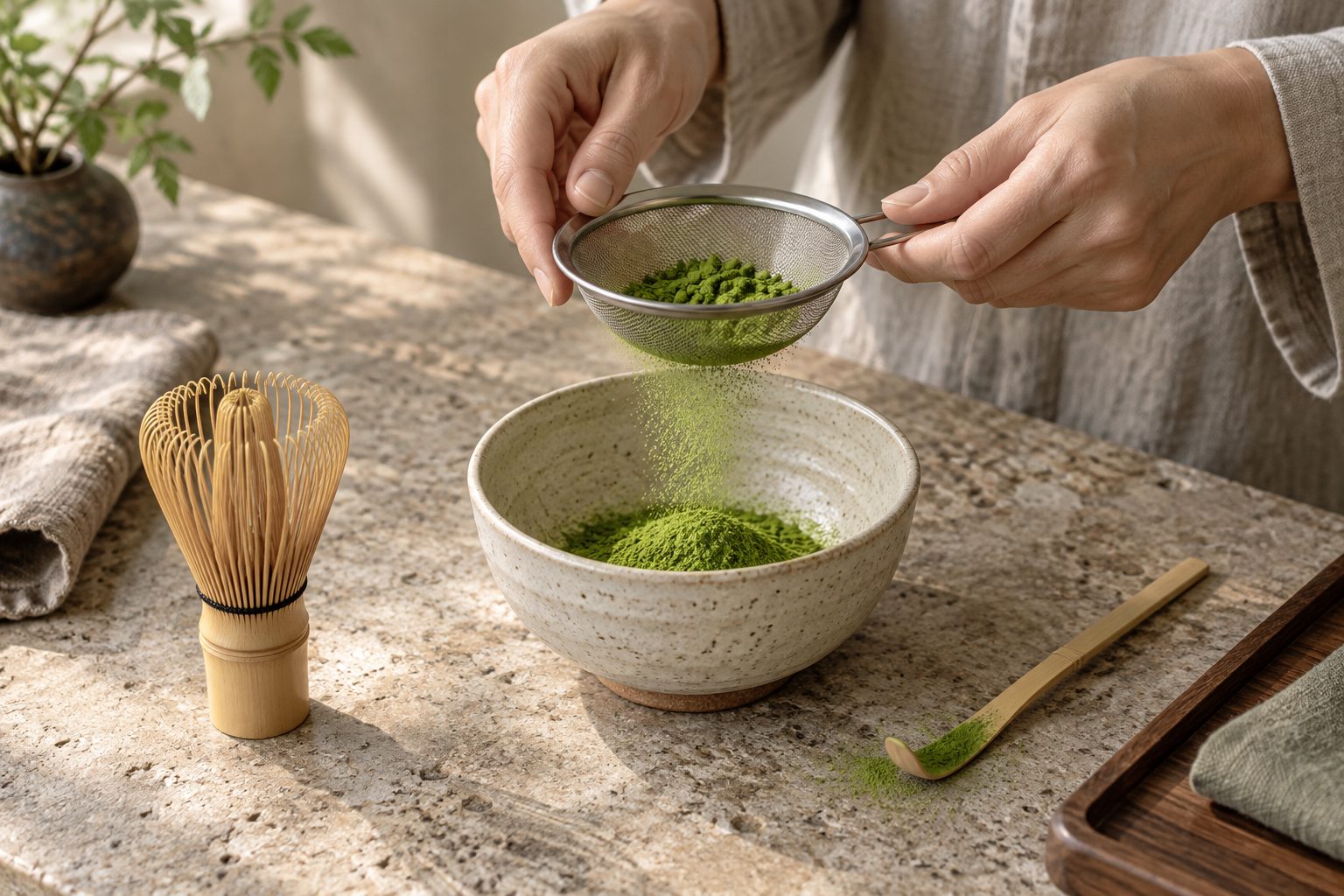
When small lumps appear as soon as matcha touches water, there is no need to assume the powder is defective. Because very fine powder wets instantly on the outside, moisture can seal the dry interior; even vigorous whisking struggles to break apart every dry core. Sifting is a straightforward preparatory step that prevents this.
Dry the sieve, tea bowl, and scoop thoroughly, and sift only the quantity needed for immediate use. If the powder is compacted, gently guide it through the mesh with the back of a spoon rather than rubbing it vigorously against a damp screen. Add a splash of warm water to the sifted powder and mix it into a smooth paste without dry specks before topping up with the remaining water. The same applies to iced lattes: work the powder into a paste before combining with cold milk and ice.
Troubleshooting persistent clumping after sifting
Check whether utensils carry residual moisture, whether the powder has absorbed ambient humidity, or if too much water was poured in all at once. If the primary packaging is damaged or exhibits an atypical smell, pause use and contact the supplier; if it is merely normal clump formation, adjusting the sifting and paste-forming steps will typically resolve it. Foam volume is also governed by water temperature, whisk technique, and the powder-to-water ratio, rather than sifting alone.
This preparation step refines the drinking experience in the cup, but it does not certify provenance or product grade. Jiang Rong Hao provides three matcha options designed for plain whisking, beverage crafting, and baking; batch details and packaging formats should be checked against specific product data. View Matcha