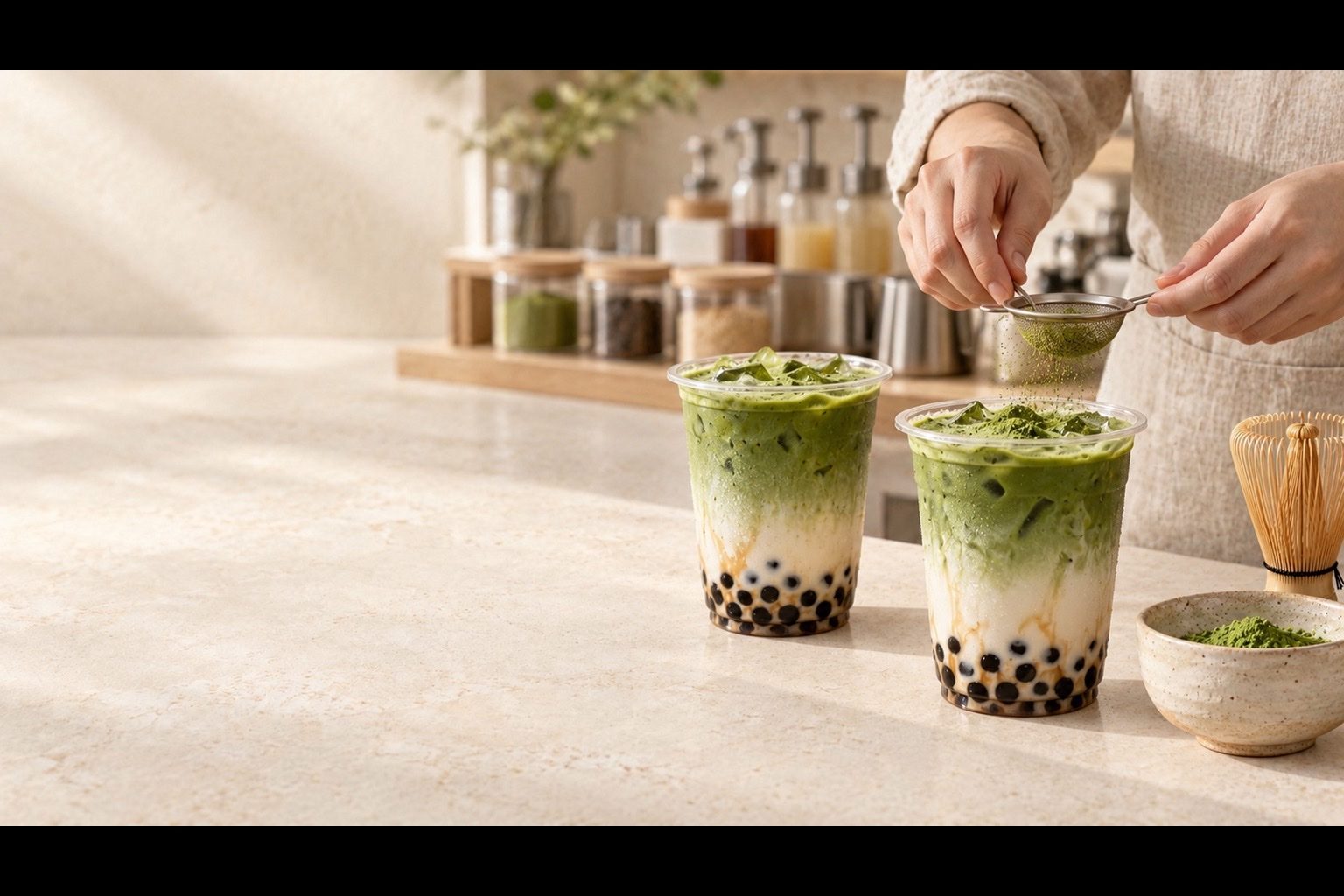
The difficulty with iced matcha is not the ice itself, but that powder clumps more readily when the temperature drops suddenly. Dusting powder straight into iced water or cold milk often leaves unmixed flecks floating on the surface. Making a small cup of warm tea paste first before adding cold liquid and ice is actually faster in practice.
Once sifted, add a small splash of warm water and smooth the powder along the bottom of the bowl; once the paste has no dry spots, add a portion of cold water or milk, and finish with ice. When comparing two powders, keep the volume of ice, milk, and sweetness identical. If shaking is required, use a vessel with enough headspace and check the lid seals tightly before pouring. Recording the time from pasting to completion allows shops to gauge the service time per cup.
A vibrant green stands out in cold drinks, but colour cannot substitute for batch details, raw material origins, or testing documentation. Jiang Rong Hao beverage matcha is suited to latte applications, though exact specifications and storage instructions should always be checked against the product page. Once opened, keep the powder away from light and moisture, and work through it promptly according to your usage rate. Learn about beverage matcha
If drinks are served for takeaway, melting ice and movement during transit will also alter the concentration. Make up a cup in-store, let it stand for a period similar to a real delivery journey, and assess any settling, separation, or loss of aroma. This test forms part of your service workflow rather than an assessment of matcha grade; noting the results will help you choose cup formats, lid seals, and whether drinks require an extra shake before serving.