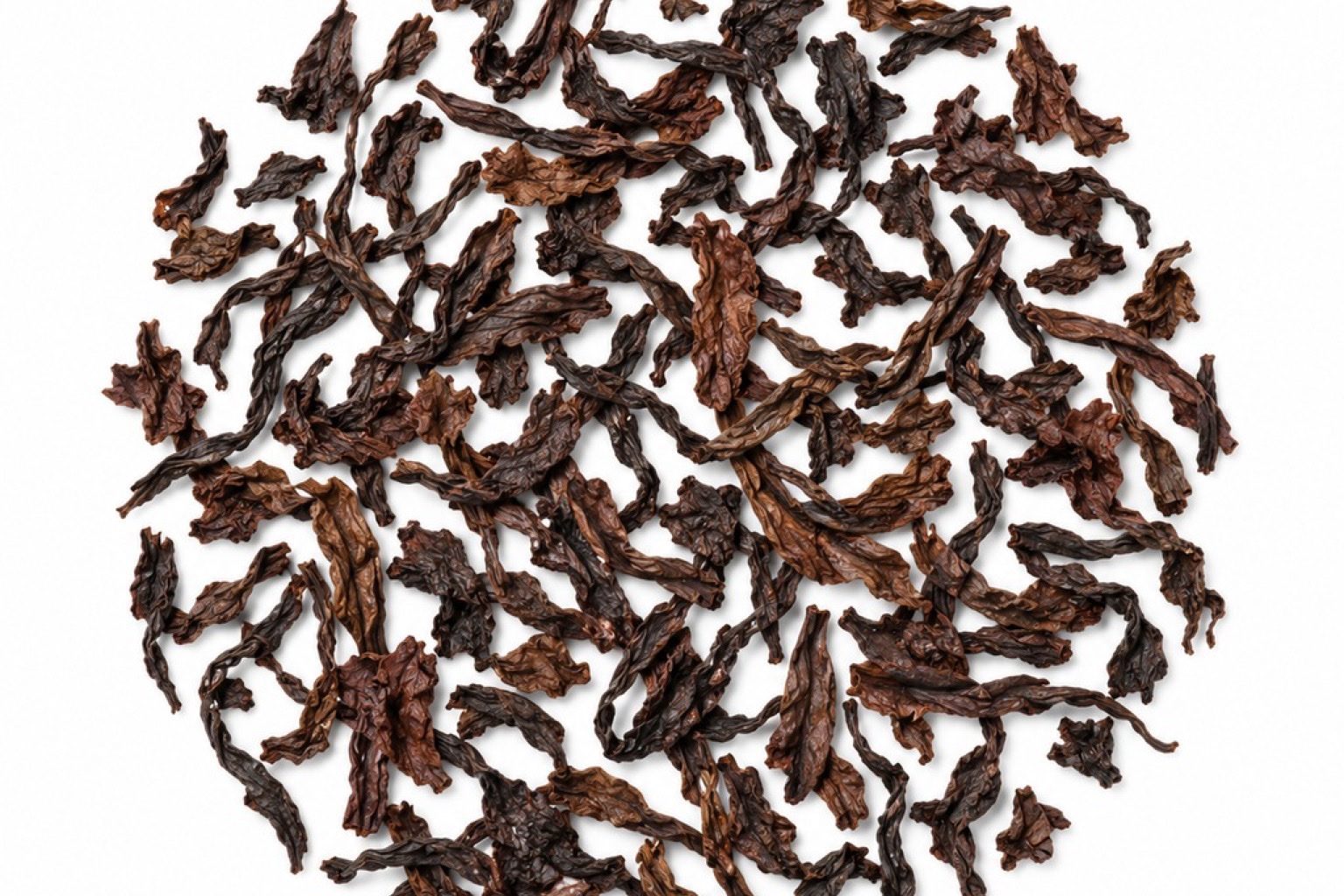
Red-braised pork belly already carries rich fat, soy sauce, and caramelised sugar; dosing ripe Pu-erh too heavily will cause the tea and rich braising sauce to clash. The proper approach is to brew an infusion that is palatable on its own, then use it to replace a portion of the braising liquid. For your first attempt, keep a small portion of pork braised without tea as a direct control.
For two to three servings, prepare approximately 350 g of pork belly, 5 g of ripe Pu-erh, roughly 250 ml of hot water, alongside ginger, soy sauce, and a small quantity of sugar. Give the tea leaves a quick rinse or brew according to product recommendations, reserving the liquor and straining out all leaf material. Cut the pork into cubes, blanch and skim off any scum, then stir-fry briefly with ginger and a dash of soy sauce until aromatic. Pour in the tea liquor and sufficient water so the liquid level sits just level with the meat. Simmer gently over low heat until tender, then uncover to reduce the sauce; top up with water as required by your cookware rather than relying on a rigid minute timer to assess doneness.
Change only one variable with tea
If the finished dish tastes astringent, check first whether the tea was brewed too strong or reduced too far, rather than rushing to mask it with extra sugar. If the tea character is entirely lost, increase the proportion of tea liquor slightly in your next trial while keeping the soy sauce and sugar levels unchanged. Raw Pu-erh and ripe Pu-erh differ fundamentally in acidity, astringency, and body; the trial results from this ripe Pu-erh recipe cannot be applied directly to raw Pu-erh.
The Jiang Rong Hao catalogue offers both ripe Pu-erh and raw Pu-erh selections; teas used as culinary ingredients should likewise be verified against food labelling and batch numbers. When catering for customers, kitchen hygiene, thorough cooking, and allergen declarations remain the responsibility of the operating food business.