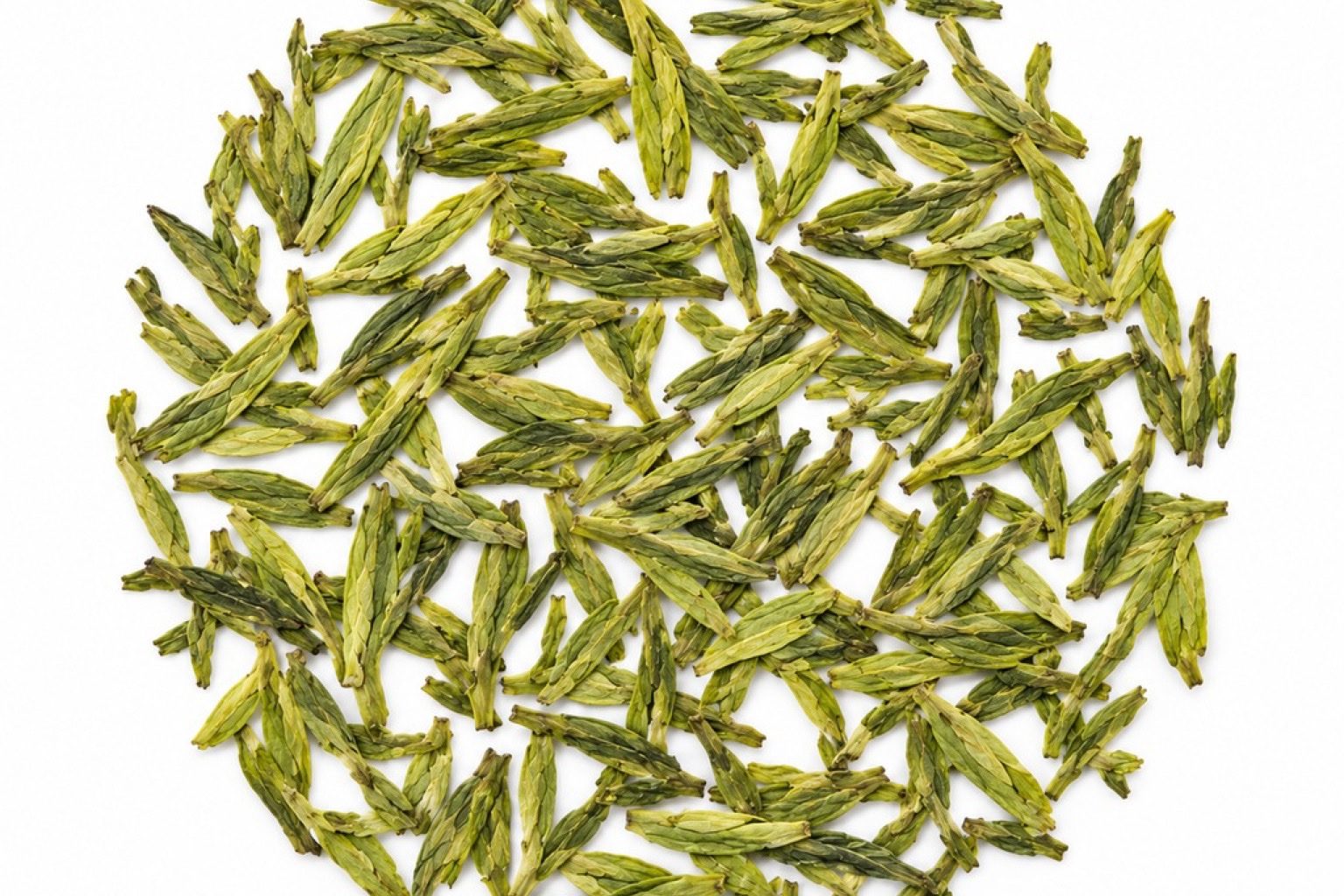
The familiar flat profile of Longjing is achieved through the physical pressing and shaping actions during pan-firing. Examining leaf shape helps monitor infusion development, but shape alone cannot verify a 'West Lake' protected geographical indication. A photograph of flat leaves cannot replace packaging provenance and origin documentation.
Spread dry leaves across white paper to inspect uniformity, colour, and broken pieces, then brew in a clear glass to track aroma, liquor clarity, taste, and leaf unfurling. Water temperature, leaf dosage, and vessel size will affect presentation; different harvest flushes will also show natural variation. Avoid deciding quality simply on whether leaves are 'greener' or 'flatter'.
When sourcing for European clients, specify the full commercial name, origin documentation, batch lot, net weight, packaging language, and destination country in your trade enquiry. The Jiang Rong Hao Longjing page offers product descriptions, whilst specific geographical origins and current batch paperwork should be confirmed directly with your supplier. View green tea catalogue
For non-Chinese markets, English transliterations and origin statements must remain consistent. Place terms such as Longjing and West Lake in their correct positions on labels and product copy; do not ascribe tea from other growing areas to West Lake merely for convenience of translation. Where required, have the responsible import entity review destination language texts.