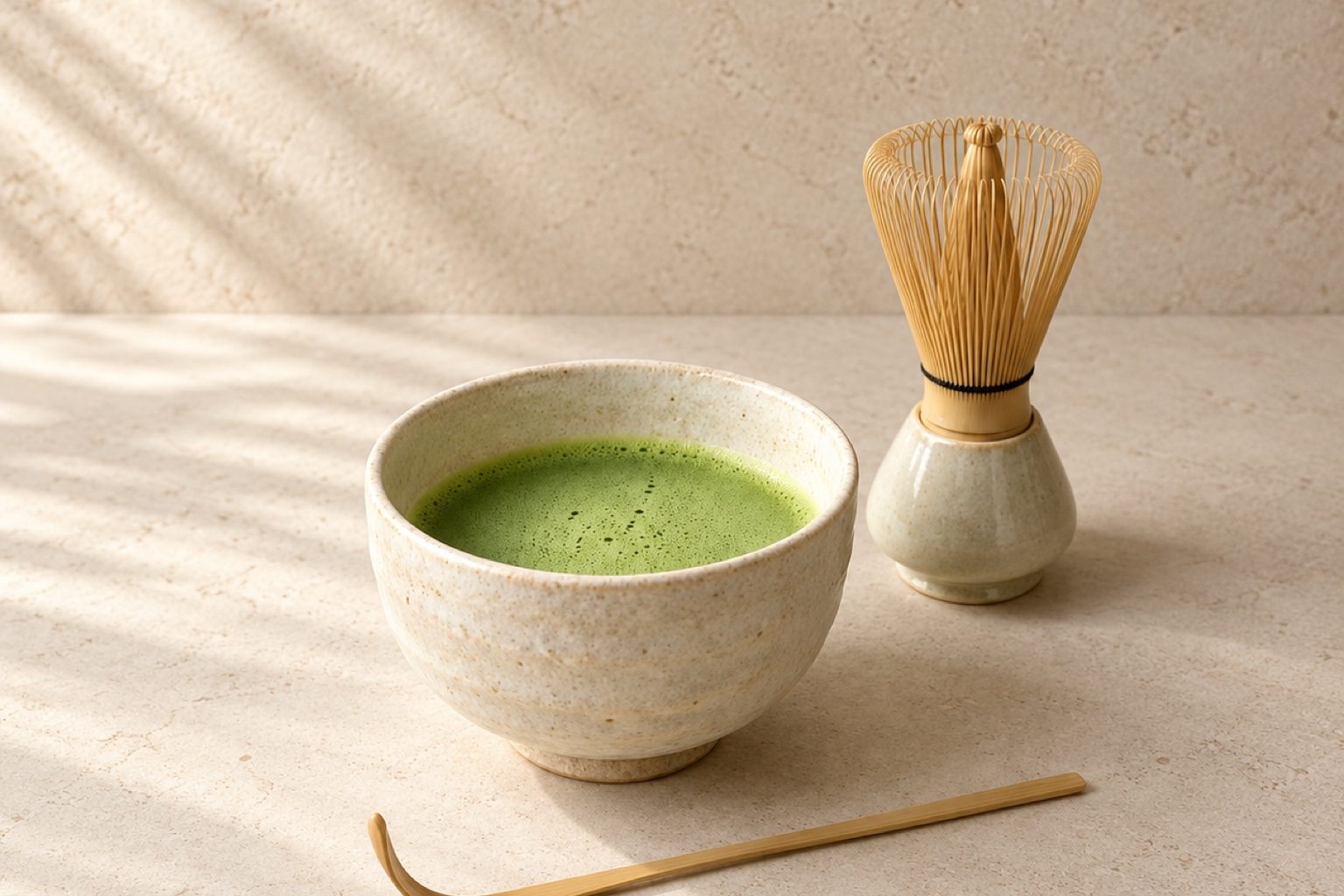
Pouring freshly boiled water directly onto matcha powder can produce an aroma and bitterness far removed from what you intended; waiting too long, however, leaves the water too cool to easily disperse the tea. Rather than memorising an arbitrary standard temperature, it is far more revealing to brew two comparative cups using powder from the very same pouch.
Check first whether the product listing provides preparation guidance. Weigh out identical quantities of powder and water, preparing one cup with slightly hotter water and the other after letting the water cool further. For both, blend the powder with a splash of water into a paste before topping up. When tasting, note the aroma, initial bitterness, finish, and foam quality. Keep the cup, water source, and whisking technique identical so temperature differences are not masked by other factors.
Intended use redefines the ideal temperature
When whisking matcha with plain water, the aromatics are experienced directly. For an iced latte, a small volume of warm water serves merely to dissolve the powder before milk and ice are added; cafés should always evaluate the final beverage rather than judging the concentrated paste alone. For baking, the powder must be assessed in the finished bake, making brewing temperature an irrelevant metric.
If a product page recommends a specific water temperature, treat it as a sensible starting point for that particular tea; personal preference can be dialed in from there. Jiang Rong Hao groups matcha by intended application; the brewing experience of one variety cannot be taken as a guarantee across all lines and batches. View product details