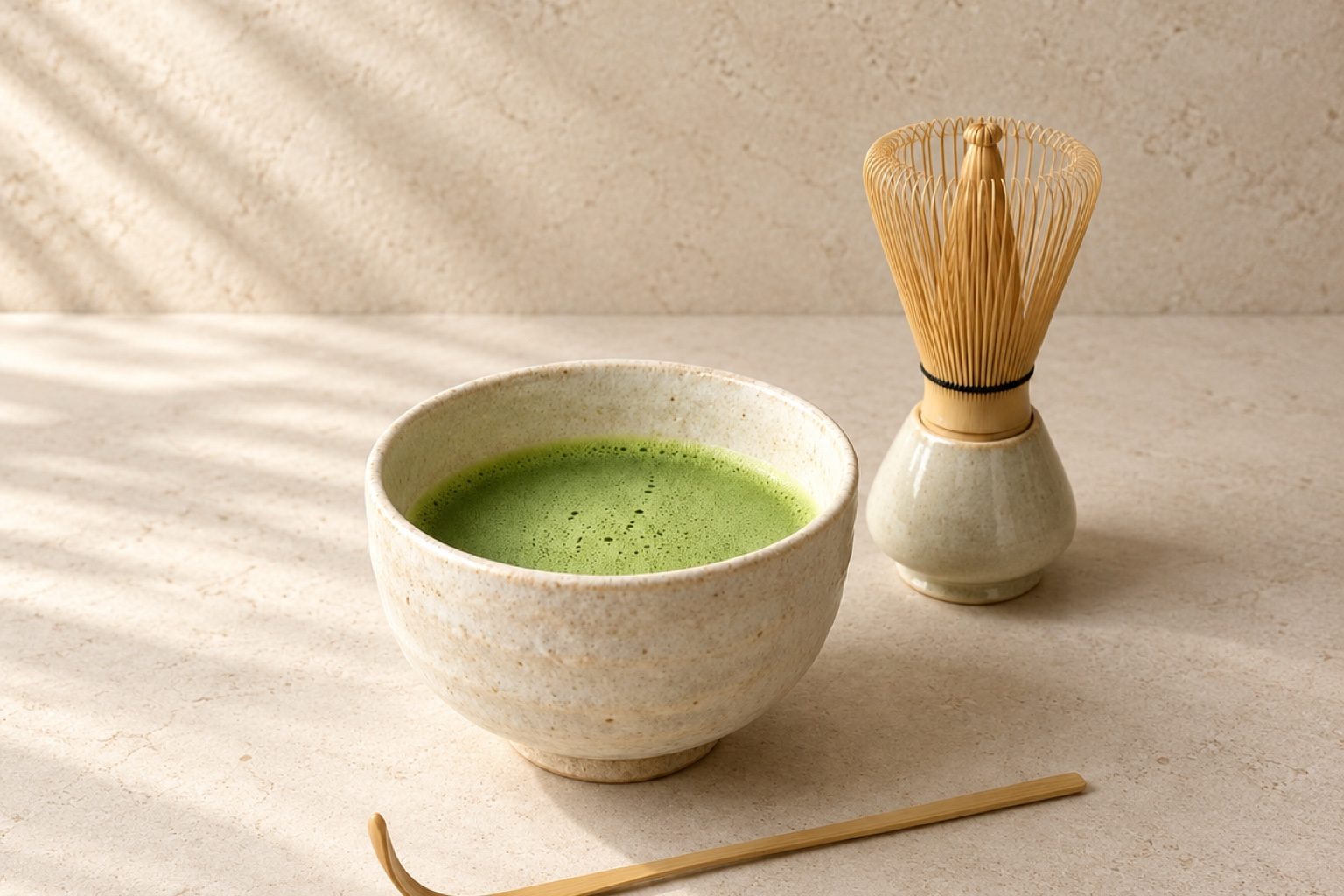
Matcha powder and water do not follow a simple rule of "stronger is better". What is appropriate for plain drinking, lattes, or baking sits along entirely different baselines: plain drinking requires balance between tea powder and water, lattes must leave volume for milk, and baking recipes are dictated by batter hydration, fats, and sugars. Determining the application first gives meaning to the ratio.
Establish your baseline using small measures
Weigh the powder with digital scales and measure the water with a graduated beaker. Add a splash of water first to create a smooth paste without dry pockets, then gently top up to the full volume. Avoid altering water temperature, milk volume, and sugar simultaneously during initial trials. Record powder weight, water volume, utensils, and mouthfeel, adjusting only one variable per round so the source of any change remains clear.
Cafés should test using their actual service cups, keeping milk volume, ice quantity, and sweetness fixed to see whether the tea character carries through to the finished drink. For biscuits or cakes, document the ratio of matcha to flour alongside post-bake colour. Ratios found online offer useful starting benchmarks, but they should not be treated as a single universal standard for all Jiang Rong Hao products. View Matcha Products
For European households and hospitality venues, water quality also deserves a place in your records. Varying water hardness directly affects liquor brightness, umami, and astringency; changing the water source at an identical powder-to-water ratio can produce entirely different results. When training café staff, documenting recipes in precise grams and millilitres prevents guesswork. If a product page does not specify a brewing ratio, state your target serving size and flavour profile when submitting an enquiry, rather than requesting an abstract standard answer detached from practical context.