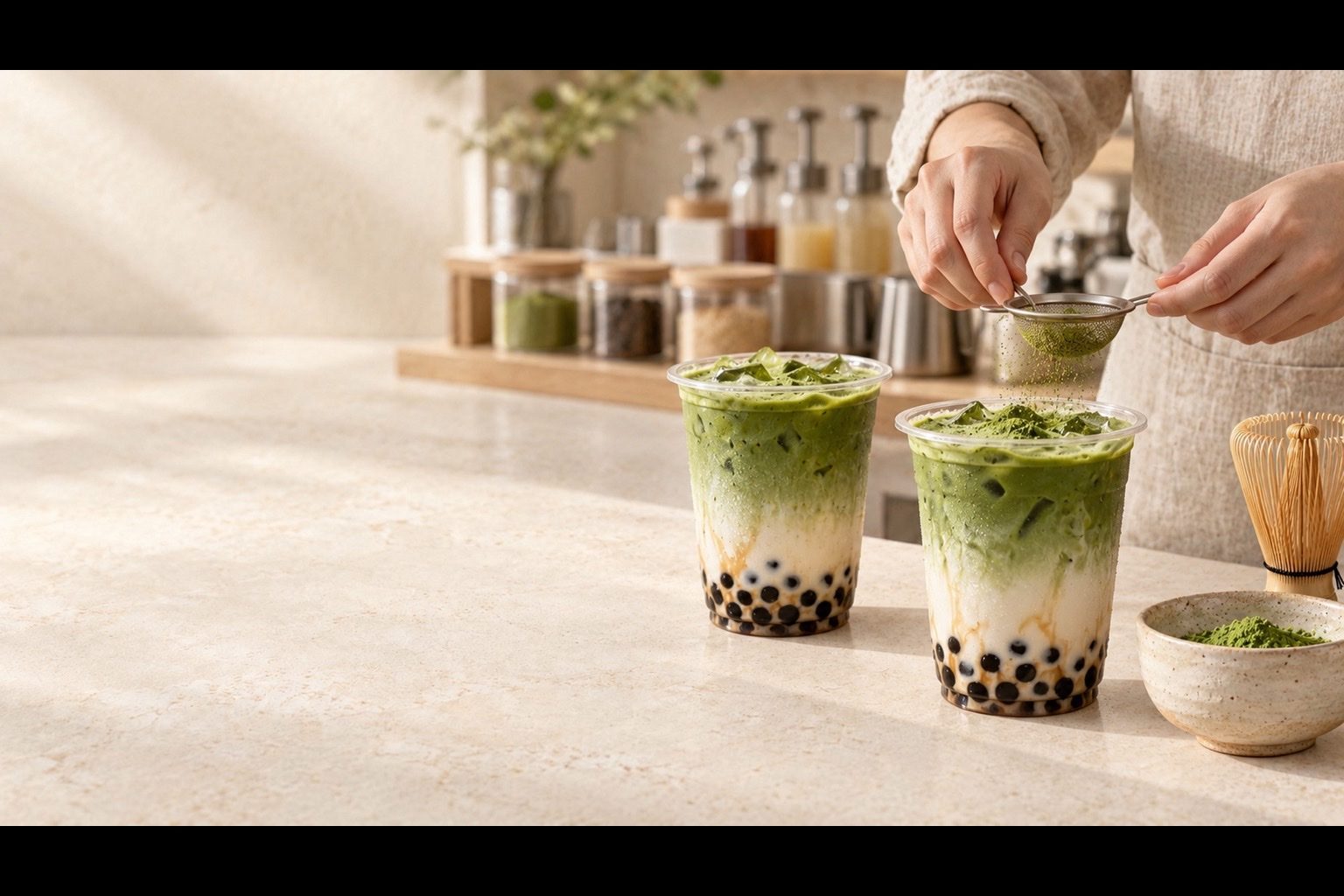
Where matcha lattes often go wrong is usually the very first step: tipping dry powder straight into cold milk, so the outside gets wet while small lumps remain inside. Dispersing it first with a small splash of warm water before adding a measured volume of milk makes both colour and strength much easier to control.
After sifting, take one portion of powder, add a small splash of warm water, and work it into a smooth paste using a bamboo whisk or small frother. Prepare an equal volume of milk at the same temperature, take a sip before adding any sugar, and then adjust the sweetness to suit your menu. For iced drinks, keep the number of ice cubes fixed, as melted water alters the strength of each serve. For home trials, note down the weights of powder, milk, ice, and whisking time; for retail premises, factor in preparation speed and clean-down routines as well.
Which type of matcha to use
A powder meant for whisking matcha with plain water may struggle to stand up to milk, whilst a culinary powder is not necessarily suited to drinking neat. Jiang Rong Hao presents matcha by ceremonial, beverage, and culinary applications; these are catalogue uses to guide sampling, not legal grades. Test a small batch with your actual recipe first before enquiring about bulk packaging, batch lots, and delivery. View beverage matcha
Shops should also test milk alternatives: whole milk, oat milk, and unsweetened plant milks differ in fat and sweetness, which shifts how the tea aroma comes through. Treat this as part of your menu development records rather than a universal product guarantee. When placing an actual order, keep the sample reference number, confirm that bulk packs come from the same batch, and verify the labelling language alongside the responsible business operator.