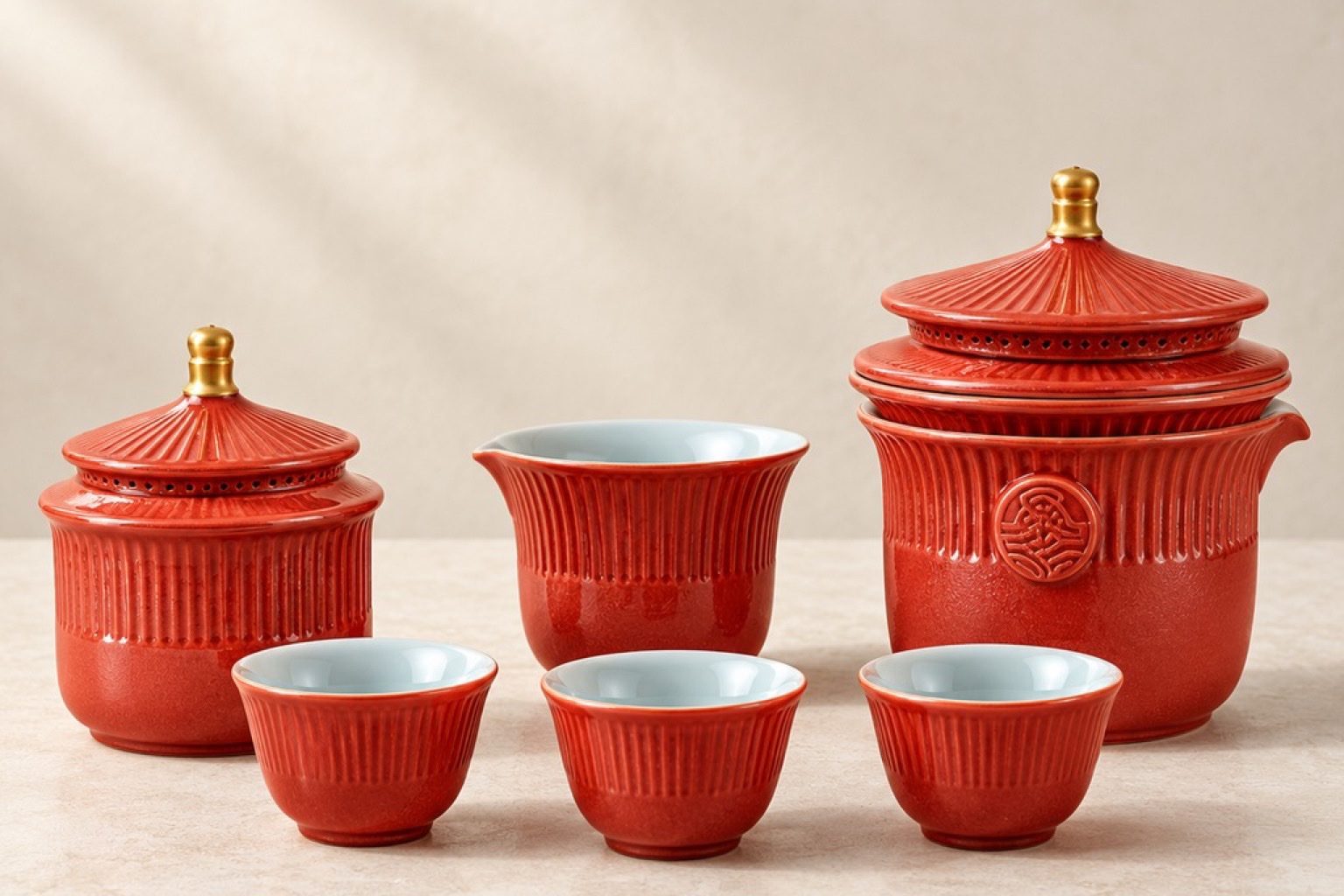
On business trips, teaware that ends up neglected is often not unattractive, but rather requires hunting down hot water, a clear surface, and a washing station each time it is unpacked. Before packing your bag, ask yourself: will this itinerary genuinely offer the opportunity to sit down and brew tea? If you only have brief gaps between the airport and the boardroom, a familiar mug may prove more practical than a complete tea set.
To travel with whole-leaf tea, pre-portion it by individual serving and pack a cup with an infuser or a compact express tea maker. Whether hotel rooms provide suitable hot water and whether teaware can be dried after washing are both far more crucial than the label "travel set". Run through the entire sequence at home before departing—measuring leaves, pouring water, decanting, washing, and repacking into the pouch; if any step feels awkward, it will only become more troublesome while travelling.
Protect your teaware, and protect your luggage
Ceramic pieces require individual impact protection to prevent them from knocking against hard items; delicate utensils like bamboo whisks need dedicated clearance to avoid crushing. When carrying tea across borders, original packaging and labelling help identify the contents, but whether goods may be imported, declared, or brought in as commercial samples must be verified against current destination customs and airline regulations.
Jiang Rong Hao express tea sets and office mugs can serve as points of comparison; weight, dimensions, capacity, and transit protection arrangements should be confirmed from the physical items or quotation materials, rather than estimated from photographs.
When travelling abroad for exhibitions, food samples, teaware, and personal tea supplies may be subject to differing declaration rules; provide the itemised manifest to logistics personnel in advance for verification.