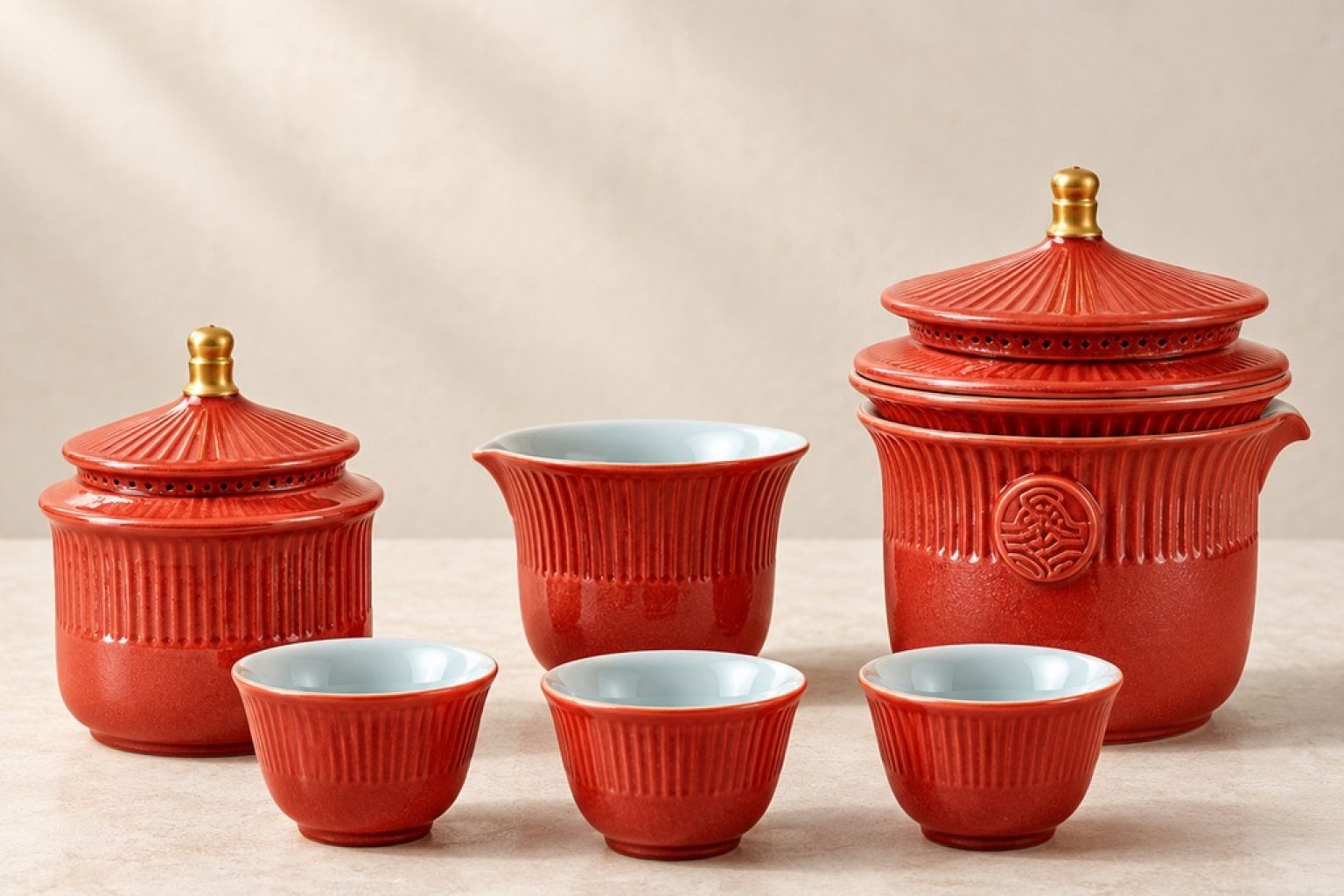
Quick-brew teaware is designed to condense 'pour – infuse – serve' into a minimal sequence of movements, particularly on office desks, during exhibition intervals, or whenever setting out a full tea service is inconvenient. It is not an obligatory vessel for all teas, nor is it inherently superior to a gaiwan or teapot.
In an office, the benefit of quick-brew teaware lies in swift decanting and fewer utensils; when travelling, weight, seal integrity, and washing facilities matter more; when hosting multiple guests at home, volume and the ability to pour consecutive rounds are key. First note down the user count, tea types, desk space, and time you are willing to spend cleaning up before deciding if it suits your needs.
Upon receiving the product, conduct a complete trial with a small amount of loose-leaf tea: add water, steep, decant, empty, dismantle, wash, and pack away. Note whether the strainer basket lifts out cleanly, whether leaves remain sitting in residual water, and whether the vessel is safe to handle when hot. Exact capacity, materials, leak resistance, and thermal tolerance must be verified against the product page.
Quick-brew sets in the Jiang Rong Hao catalogue can be trialled alongside loose-leaf teas. For European retail store procurement, packaging dimensions, transit breakage procedures, and replenishment channels must be confirmed separately.
If a quick-brew vessel is used for sample evaluations, all candidate teas must use identical water volumes and decanting methods; otherwise, the test merely demonstrates teaware convenience rather than differences between the teas.
When serving larger groups, the capacity and decanting speed of quick-brew teaware can become limiting factors; test against the actual number of people served in a round rather than looking purely at the volume of a single cup.