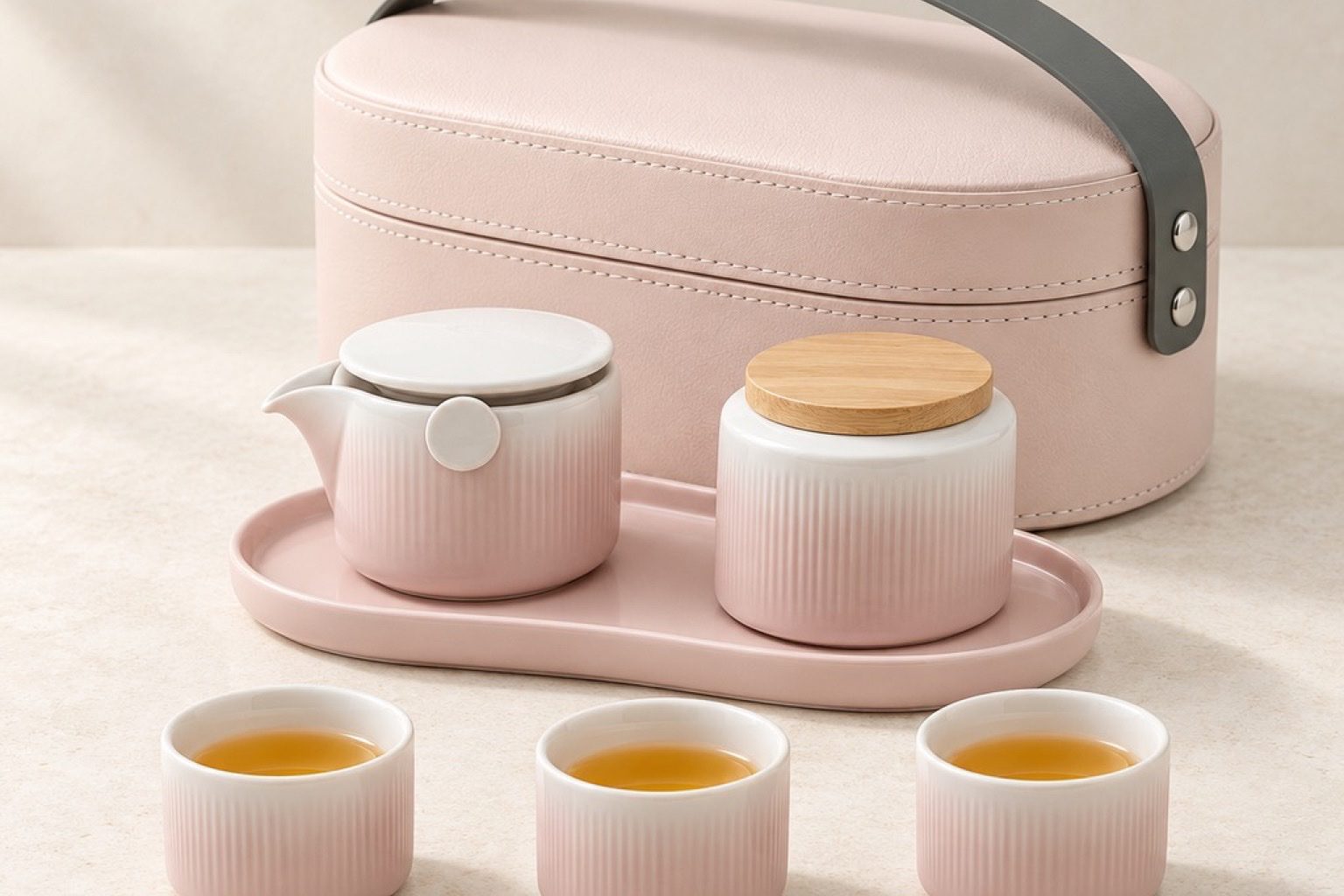
Gongfu tea uses small teapots or gaiwans to steep tea for short intervals across multiple sequential infusions, whereas Western-style large pots brew a larger volume at once, designed for direct pouring into cups. These methods do not represent a hierarchy of 'authentic' versus 'simplified', but cater to different timeframes, table spaces and group sizes.
To observe how a Dancong or Pu-erh evolves across successive infusions, smaller teaware, higher leaf-to-water ratios and swift decanting provide more points of comparison. When hosting larger gatherings, enjoying continuous conversation, or working in an office without space for a tea tray, a large pot brewed in a single step requires fewer movements. Both approaches require selecting an appropriate leaf dosage; applying a Gongfu tea dosage directly to a long-steep large pot may result in an overly concentrated brew.
Test with the Same Tea
Take two portions of tea from the same batch, for example, brewing one with short infusions in a small pot and the other as a single infusion in a large teapot. Record the leaf dosage, vessel capacity, infusion timings and impressions of each cup before deciding which method suits your routine. Avoid mistaking differences in strength resulting from the two brewing methods for variations in tea leaf quality.
When introducing Chinese tea to European retail shops or teahouses, it is best to explain two workable brewing methods simultaneously, ensuring customers who already own teapots can brew straight away. Refer to actual product specifications for vessel capacity, heat resistance, and set components.
Restaurant service also requires considering whether staff can consistently replicate the steps, and whether the table layout provides a drainage area; attractive teaware cannot substitute for an efficient service workflow.