When sampling matcha for a cafe, it is best to involve procurement, baristas, and pastry chefs in the same tasting session. If purchasing looks only at unit cost while the counter team looks only at colour, you often end up with a powder that handles poorly on the service bar. Agree on the actual drinks you intend to sell before setting up your sample comparison.
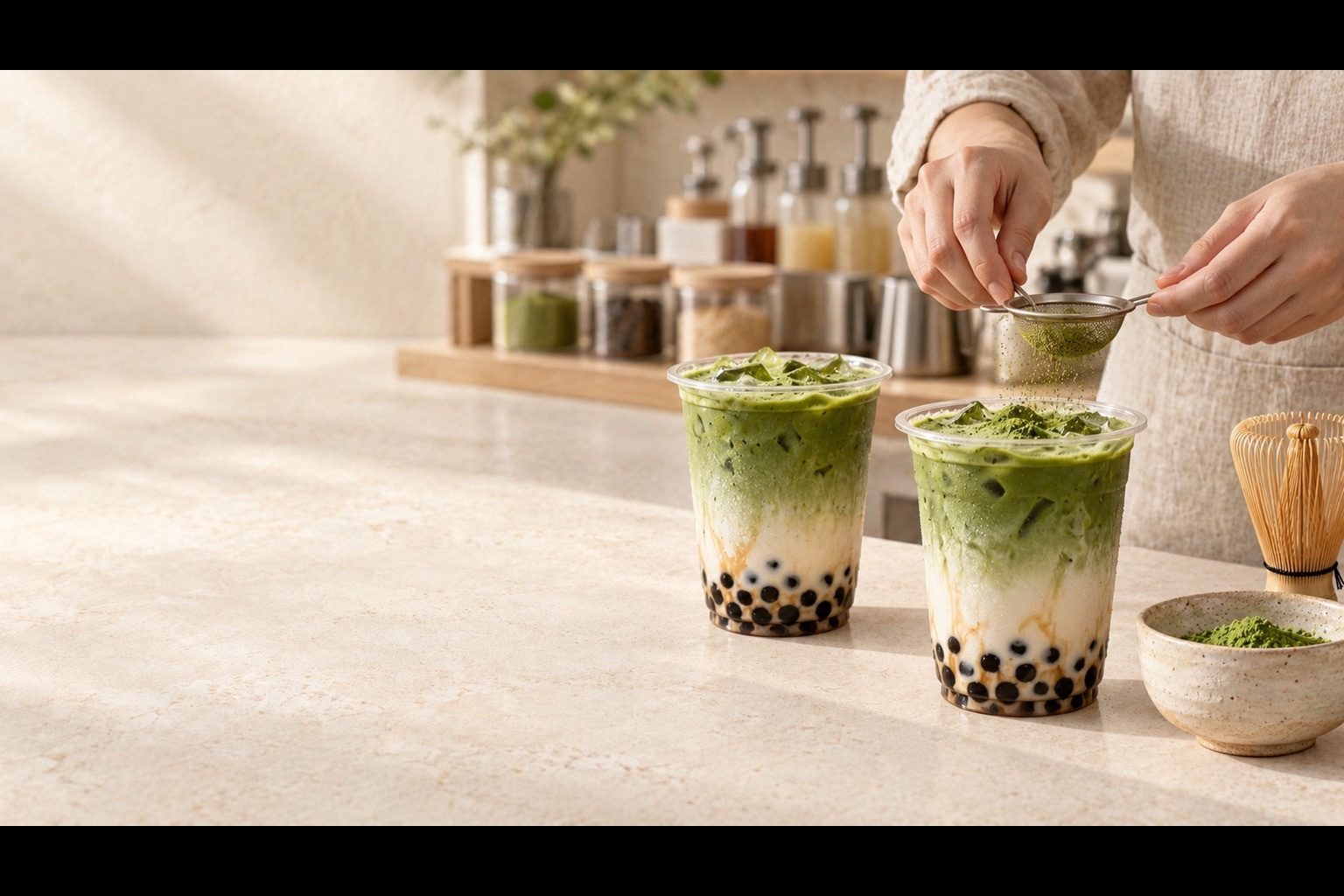
Prepare at least three test drinks: matcha whisked with plain water, a hot matcha latte, and an iced matcha; if your menu includes sweets, add a small baked trial. For each drink, standardise the milk volume, ice quantity, sweetness level, and cup size, logging powder weight, dissolution speed, mouthfeel, colour, and clean-down effort. Avoid treating 'ceremonial', 'beverage', and 'culinary' as statutory grades; within our current catalogue, they represent intended application profiles.
Review supply chain details once samples are approved
Include the sample batch lot, available pack formats, estimated monthly volume, MOQ, labelling language, testing documentation, destination country, duties, and lead times in your request for indicative pricing subject to confirmation. Strong sample performance does not automatically guarantee identical bulk supplies in perpetuity. Jiang Rong Hao offers three application types; venues should verify each parameter against their local regulations and menu needs. View wholesale terms
If your business supplies accounts across multiple jurisdictions, confirm labelling languages, dispatch origin, and VAT or customs responsibilities for each market. Keeping 'sample approval' distinct from 'ready to purchase' ensures clearer procurement records.