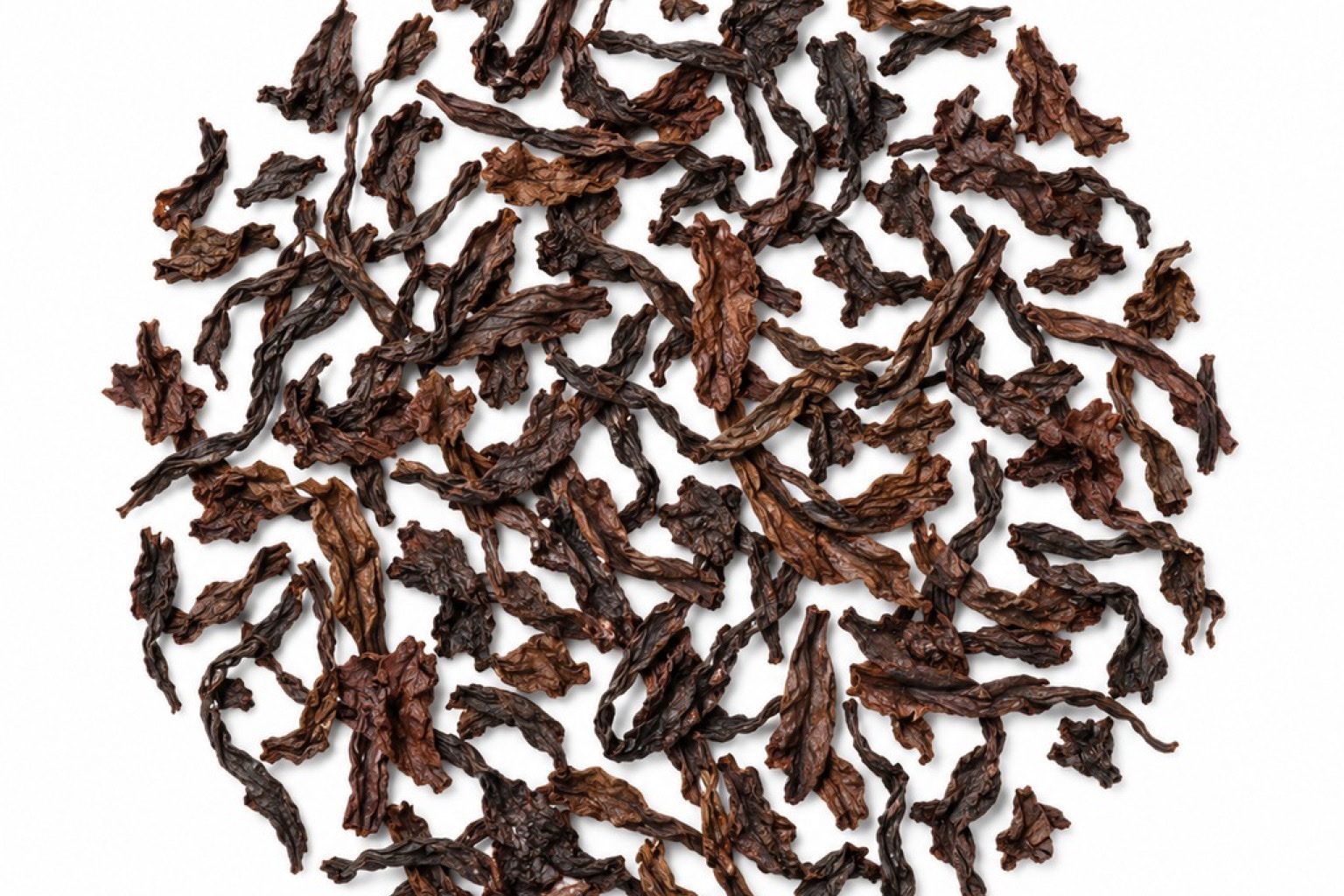
Ripe Pu-erh is often described as rich, thick and smooth, but these words need to be evaluated in a real cup of tea: the colour of the liquor, the smoothness on the palate, whether any off-flavours linger after swallowing, and whether it continues to evolve over several infusions. Do not deduce storage conditions or vintage purely from the name 'Bulang Mountain'.
Take a small portion of tea and brew three infusions using the same teapot. Use the first infusion solely to awaken the leaves and assess the aroma, then record the body, sweetness and finish across the next two infusions. If a pronounced wet-pile odour is present upon opening, aerate or store the tea according to the product guidelines before testing again; the storage method and duration must be recorded. For shop procurement, test with actual teapots and serving volumes rather than relying on small tasting cups for plain drinking.
The Bulang Mountain ripe Pu-erh page from Jiang Rong Hao is available for sampling. If batch numbers, production years, storage conditions and testing are not specified on the product page, they should be requested separately from the supplier; articles do not guarantee these details. View Ripe Pu-erh
The thickness of ripe Pu-erh also increases rapidly with tea quantity and steeping time. If the palate feels muffled or heavy, shorten the infusion time before judging the product; if only one sample repeatedly shows off-flavours under identical conditions, report these results back to the supplier. Avoid labelling an entire category of ripe Pu-erh based on a single over-extracted brew.