
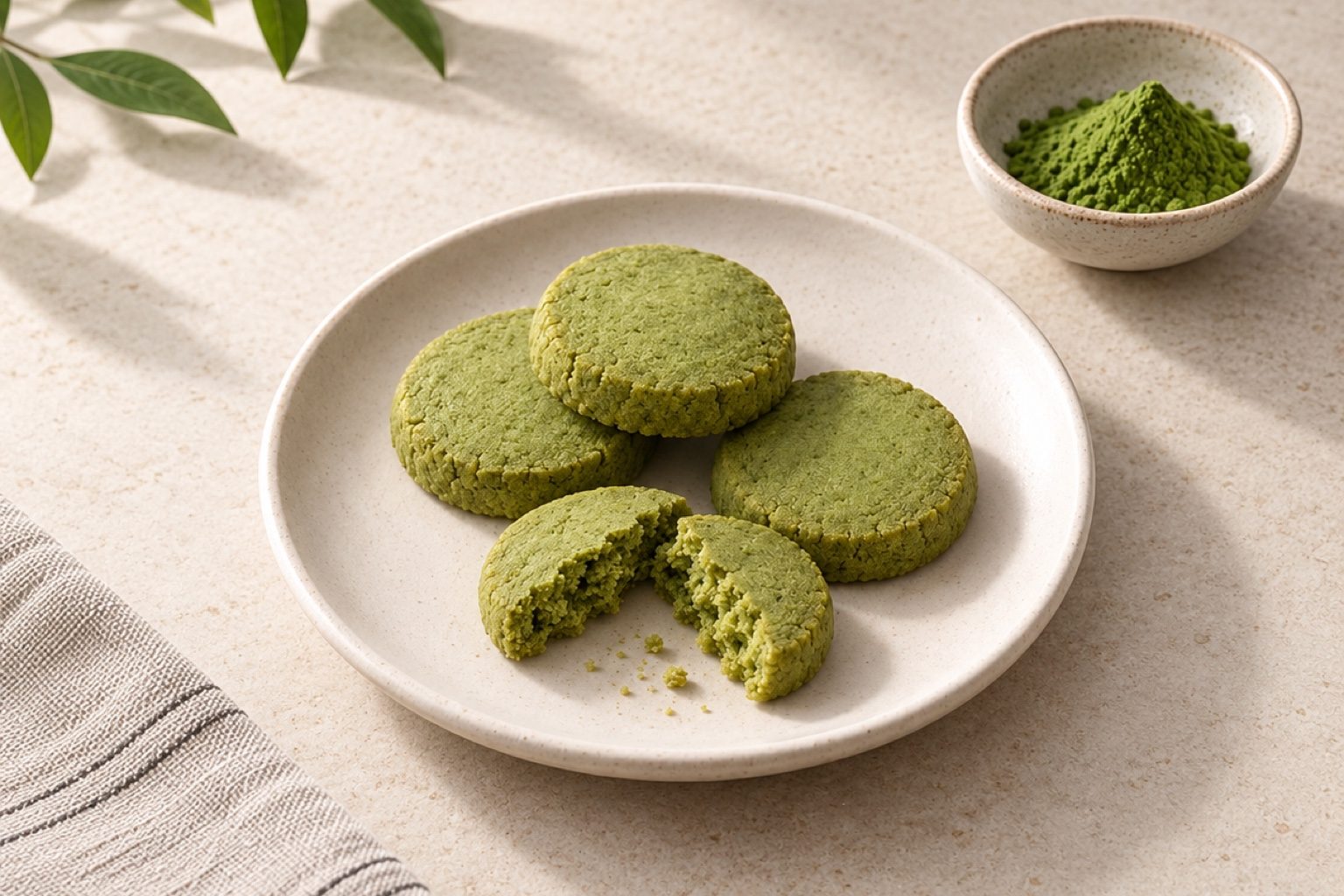
A vivid green matcha biscuit does not guarantee ample tea flavour; an overly dark hue may simply mean too much powder was added, which can taste astringent on the palate. For your first tray, hold the ratios of butter, sugar, and flour constant, comparing only the proportion of matcha and how it behaves after baking.
Sift the powder and blend it with the flour, observing whether small lumps form during mixing. Record the colour and scent of the dough before baking, let the batch cool completely, and then evaluate tea character, sweetness, and lingering finish. Oven performance varies considerably, so a set temperature reading does not guarantee identical heat across appliances. If supplying shops, log the weight, colour, and shelf-life performance of each finished batch.
The value of culinary matcha should be judged inside an actual recipe rather than held to criteria meant for drinking neat. For Jiang Rong Hao culinary products, packaging formats, and available weights, please refer to the product page; before ordering in bulk, confirm sample documentation, subsequent batch records, and delivery schedules. View culinary matcha
If biscuits are destined for extended display, their colour and aroma after cooling matter far more than how they look straight out of the oven. Logging conditions at one hour, one day, and several days post-bake reveals whether the green tone and tea notes remain stable or quickly fade. Without such shelf-life testing, avoid claiming on packaging or marketing copy that products 'stay bright green indefinitely'.