
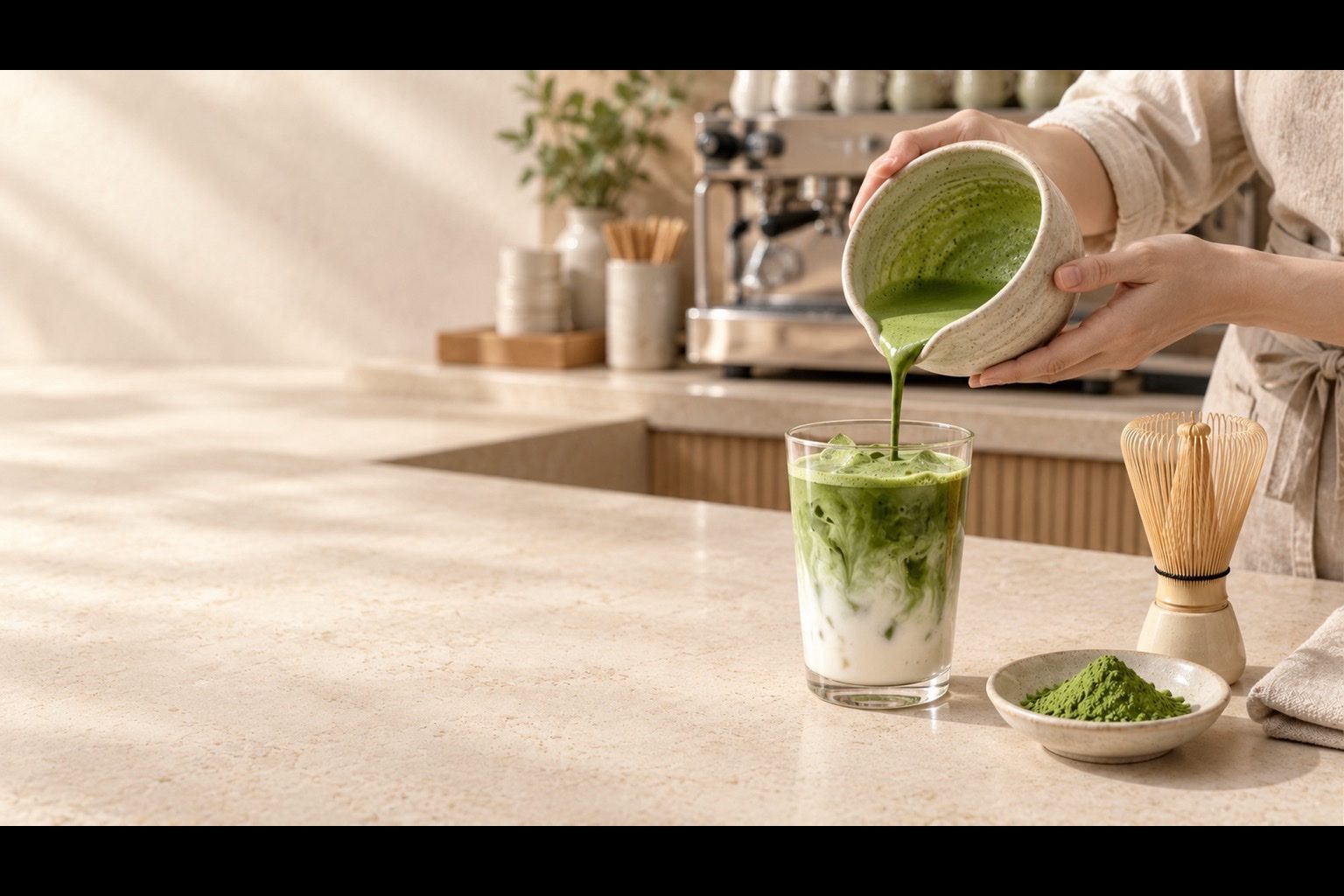
Adding matcha to a menu often involves far more than simply procuring a bag of green powder. Across European purchasing and recommendation enquiries surveyed, questions about where to buy, whether it suits lattes or baking, and pricing and specifications were repeatedly grouped together; this merely reflects the points of focus within this sample of questions and does not imply that cafes across Europe are experiencing universal growth.
The first calculation: actual yield per cup
Begin by conducting test brews for hot lattes, iced lattes, and matcha whisked with plain water using standard cup sizes, recording the powder weight, milk volume, ice quantity, and preparation time for each serve. The Jiang Rong Hao catalogue categorises matcha into ceremonial, beverage, and culinary applications; for cafe lattes, trial the beverage application first, then compare colour, powdery texture, and aftertaste against other samples using the exact same recipe. Only by multiplying the price per gram by the actual powder used can you approximate your true ingredient cost per cup.
The second calculation: consistent staff replication
During trials, have different team members complete two rounds following the same operating card, observing whether sifting, making a paste, whisking, and cleaning eat into peak operating hours. For baked goods, evaluate the colour and flavour after heating rather than relying on neat beverage samples as direct substitutes. Designations such as "ceremonial", "beverage", and "culinary" reflect current catalogue application tiers and must not be presented as standardised legal grades.
The third calculation: what happens before delivery to the shop
Batch documentation, packaging, shelf-life details, dispatch location, MOQs, carriage costs, duties, and lead times all dictate whether an item can be stocked sustainably. Labelling and responsible economic operator requirements across European countries must also be checked against the actual market of sale. Request samples and test your recipes before comparing like-for-like quotes; do not let a single attractively coloured test brew replace sound judgement on long-term supply.