
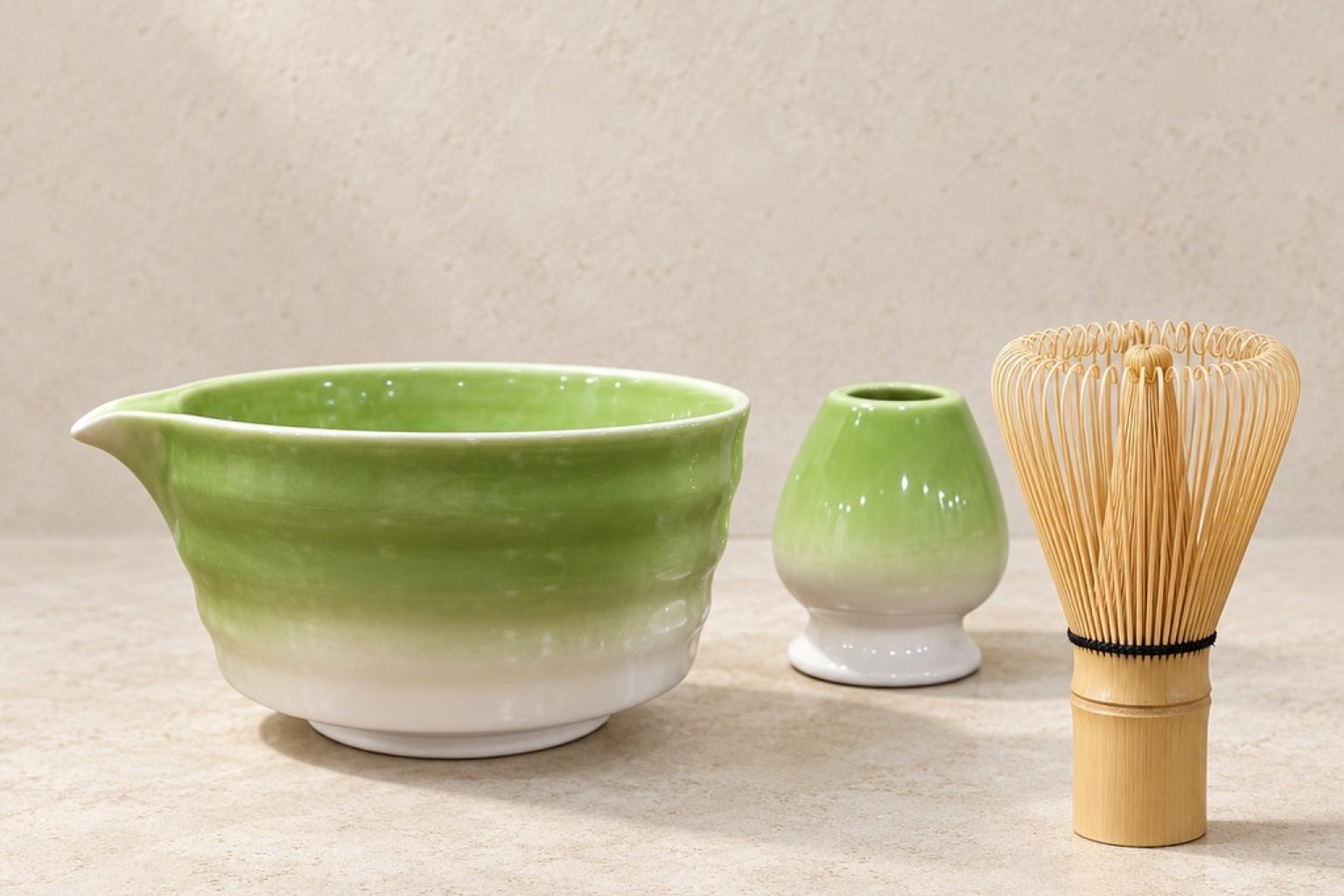
Two main risks follow chasen use: powder residue lingering between the tines, and bamboo remaining damp for prolonged periods. When cleaning, rinse away leftover powder under running cold or lukewarm water, gently separating stuck tines with your fingers; do not pry them apart forcefully, and never boil a bamboo whisk in boiling water.
After washing, allow the chasen to drip dry naturally, then place it in a well-ventilated spot. A chasen stand helps the tines maintain their shape and keeps them off the worktop, but it does not replace drying. Ensure both the interior and exterior are completely free of moisture before placing it into a box or pouch; repeated use in damp environments leaves bamboo prone to mould and warping.
If a chasen has split tines, an off-odour, or visible mould, do not continue whisking tea with it simply to spare the expense of a replacement. When replacing it, place the old and new whisks side by side to compare tine curvature and spring, noting which action feels more comfortable. Unless explicitly stated in the product details, do not use detergents, dishwashers, or drying appliances.
The Jiang Rong Hao teaware page serves as an entry point for selection; the material, dimensions, packaging, and transit protection of chasen are governed by actual product listings and orders.
The chasen is a consumable tool, and frequent users should plan for regular replacements; do not overlook a loss of tine flexibility simply to chase a higher tine count.
If intended for long-term storage or cross-border transit, the chasen must be completely dry before packing, with the packing method confirmed by the supplier; damp bamboo components are easily damaged during transit.