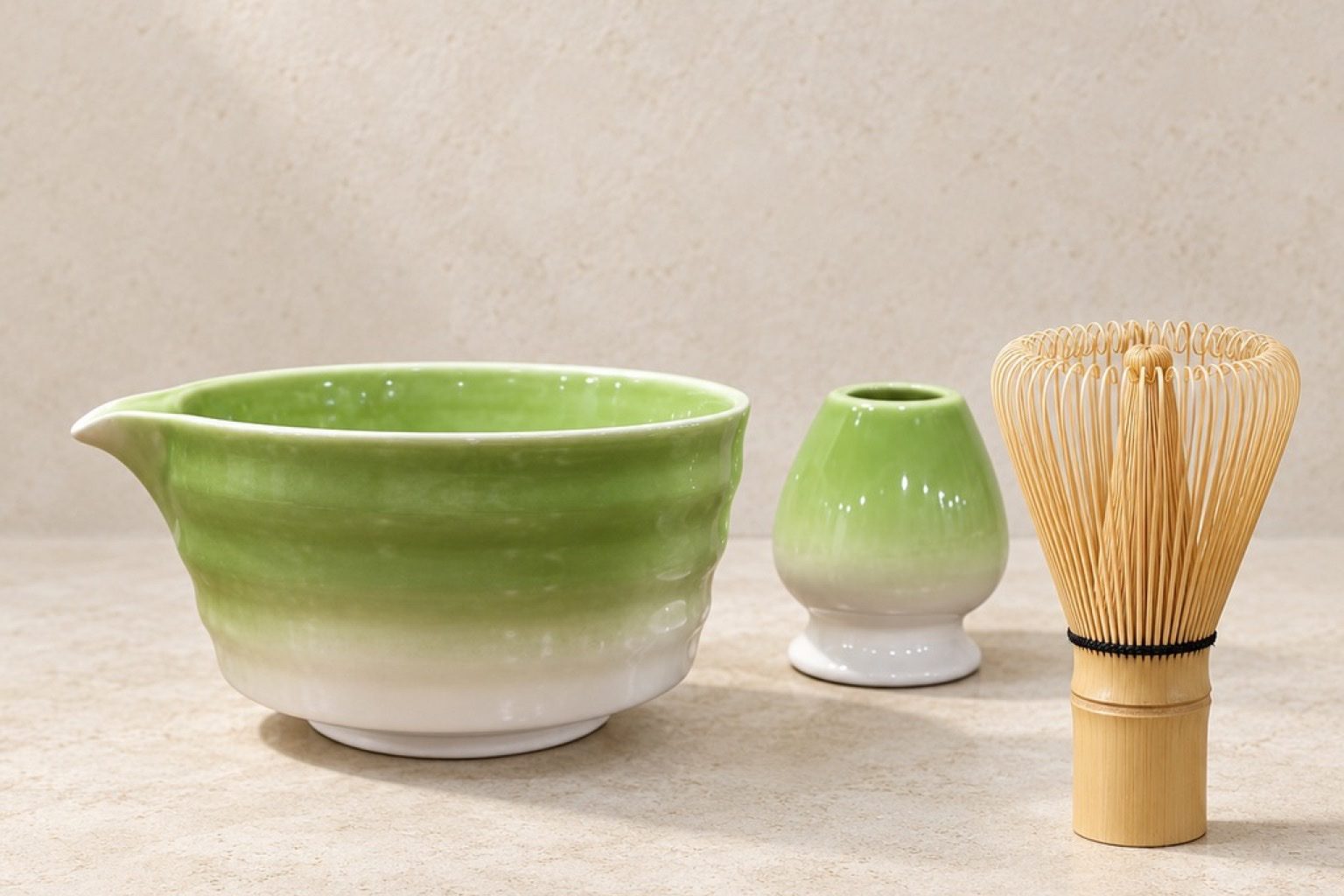
A chasen stand is not a decorative ornament. Inverting a wet chasen onto the stand supports the tines and prevents the bamboo from pressing directly against the worktop; an area with good ventilation promotes thorough drying. It resolves post-wash resting requirements, but cannot repair already broken tines.
After using a chasen, rinse away residual powder, gently reshape the tines, and centre the core over the stand's curved profile. Do not pack it into an airtight box immediately after washing while still wet with water droplets; maintain adequate air circulation around the stand. If the stand itself is cracked, chipped, or unstable, it should also be replaced.
When buying, check three points only: whether the stand supports the chasen stably, whether the curve fits the tine dimensions, and whether the surface is easy to clean. Colour and styling are personal preferences and do not reflect bamboo quality or whisking performance. For ceramic pieces shipped to Europe, confirm protective packaging, and verify material and food contact safety specifications against product documentation.
The Jiang Rong Hao catalogue includes chasen stands and matcha teaware; whether an item is sold as part of a set, along with its specific dimensions and components, cannot be inferred from images.
If the stand is the wrong size, the tines will either be pinched or left unsupported; measuring the base of your chasen and existing storage space prior to purchase is often far more useful than comparing colours.
When dispatching a chasen stand alongside a chasen, the stand body and tines require individual protection, particularly for ceramic stands; transit arrangements should be specified in gift box or procurement listings.