
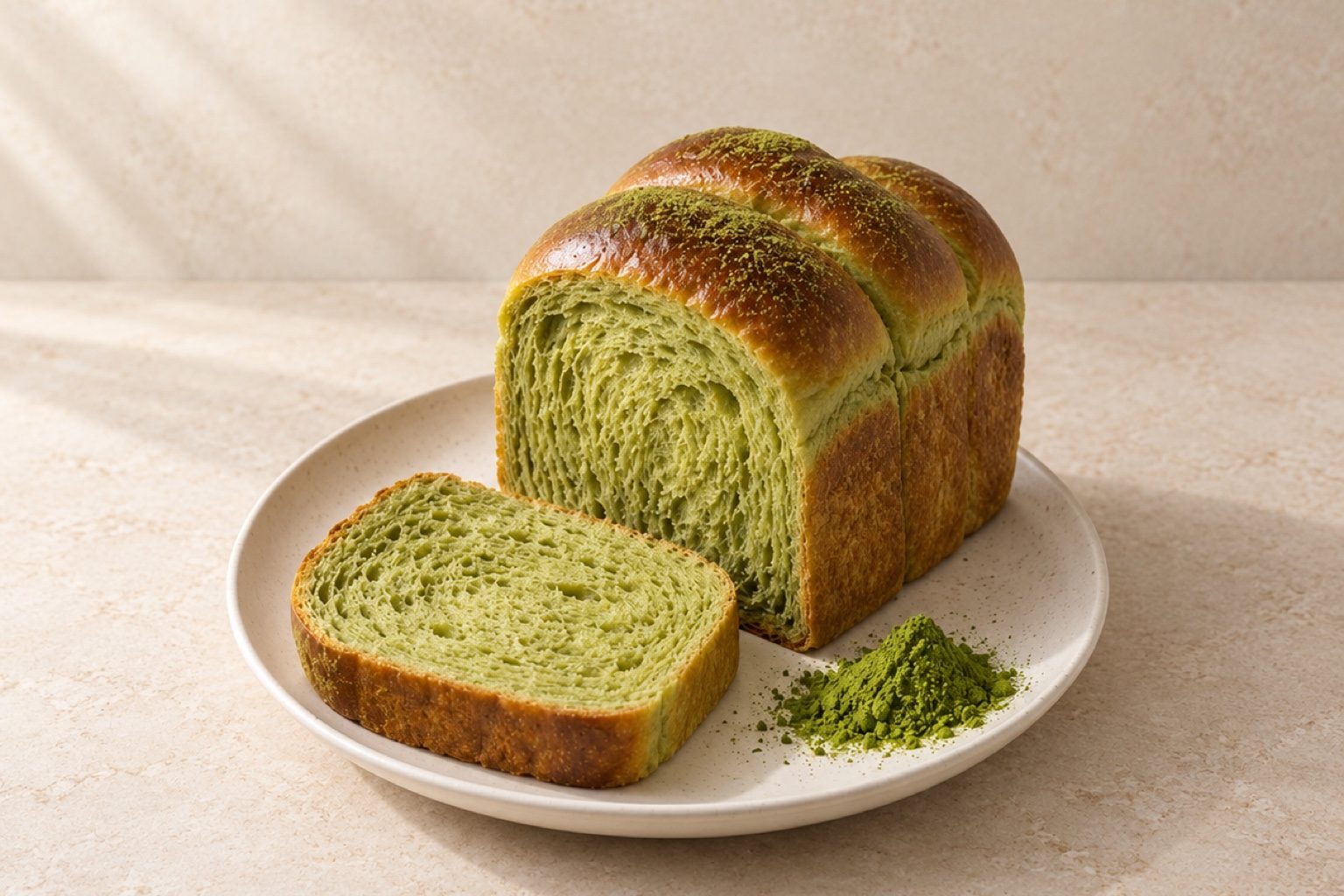
When matcha bread emerges from the oven with a muted aroma, the issue is rarely that the powder lacks flavour; rather, the dough's hydration, fats, and proving time have dispersed the tea notes. Bakeries should first bake a small sample loaf using their standard formulation instead of judging the tea solely by the colour on the pouch.
Blend the matcha thoroughly into the flour rather than folding it into wet dough at the end. Note the colour after kneading, changes across fermentation, and what aroma remains once loaves are fully cooled. If incorporating cocoa, nuts, or dried fruit, test these combinations separately first; when too many inclusions compete, it becomes hard to tell what is masking the tea. Production kitchens must also track daily volume and reseal pouches securely after opening.
Culinary applications are the natural starting point for recipe trials. The usage labels in the Jiang Rong Hao catalogue help narrow the selection, but they cannot replace hands-on testing with your own ingredients; please confirm exact packaging, stock, and cross-border shipping terms prior to ordering. View baking matcha
Proved dough must also withstand slicing, packaging, and counter display. Recording the tea aroma, crumb colour, and next-day texture helps determine whether to raise the powder percentage, scale back competing ingredients, or adjust bake times. If supplying multiple retail outlets, standardised scales and recorded pouch-opening dates are far more useful than vague claims of an 'intense aroma'.