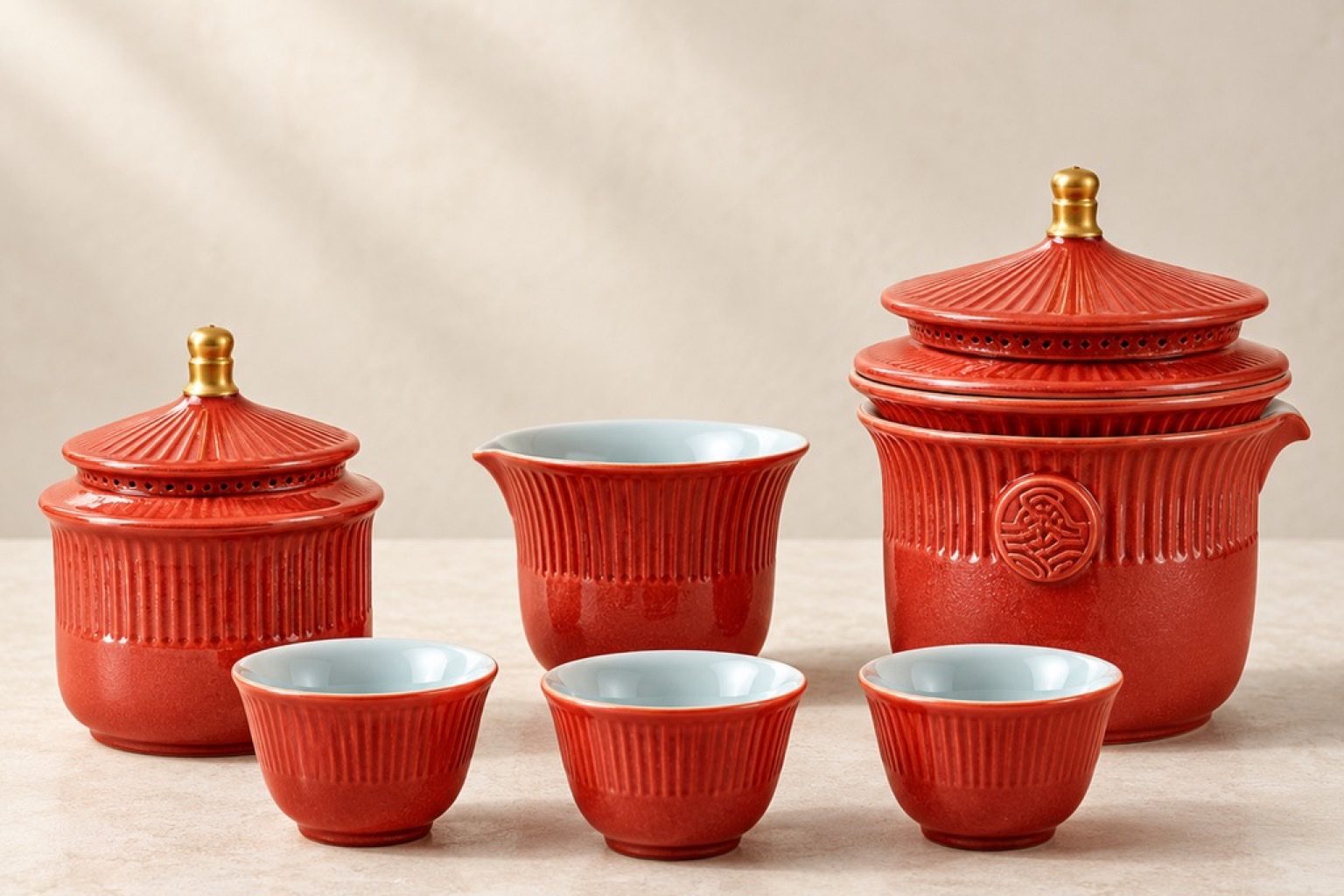
Gaiwans, teapots, and quick-brew vessels can all be used to brew loose-leaf tea; the key differences lie in control and cleaning routine. A gaiwan makes it easy to observe the leaves and decant swiftly; a teapot provides a fluid pouring action and comfortable grip; quick-brew teaware integrates straining and decanting into a single vessel, ideal for minimal setups.
If you wish to evaluate the aroma and spent leaves of a tea, the wide opening and pale interior of a gaiwan generally offer better visibility; for regular household use serving two or three people, a teapot may prove more convenient; for preparing a quick cup at the office or on the road, quick-brew teaware cuts down on steps. These are functional orientations rather than a hierarchy of quality.
When unsure, conduct a comparative trial using the same tea: note the user count, vessel capacity, leaf weight, infusion time, and the steps required for washing. Be careful not to use vessels of differing capacities and then attribute all variations in liquor strength to teaware material. When sourcing for European gifting, assess packaging volume, breakage risk, and whether the recipient will genuinely use the teaware.
The Jiang Rong Hao catalogue offers choices including quick-brew teaware, gongfu tea sets, and office mugs; whether a gaiwan is included as part of a set, as well as the capacity and material of each piece, must be checked page by page.
For buying comparisons, have the same person brew consecutively with all three vessel types, recording wrist strain, decanting speed, and cleaning time; such practical testing is far more dependable than choosing by vessel name.
When giving a gift to someone new to Chinese tea, instructions and cleaning tips should take priority over cultural explanations of the teaware, ensuring they are not left unsure of how to use it upon arrival.